
Listen, can you hear that? The sound of silence. Can you smell that? The fresh mountain air sprinkled with sage and thyme. Can you feel it? The tranquil vibes of a harmonious place still awaiting to be discovered.
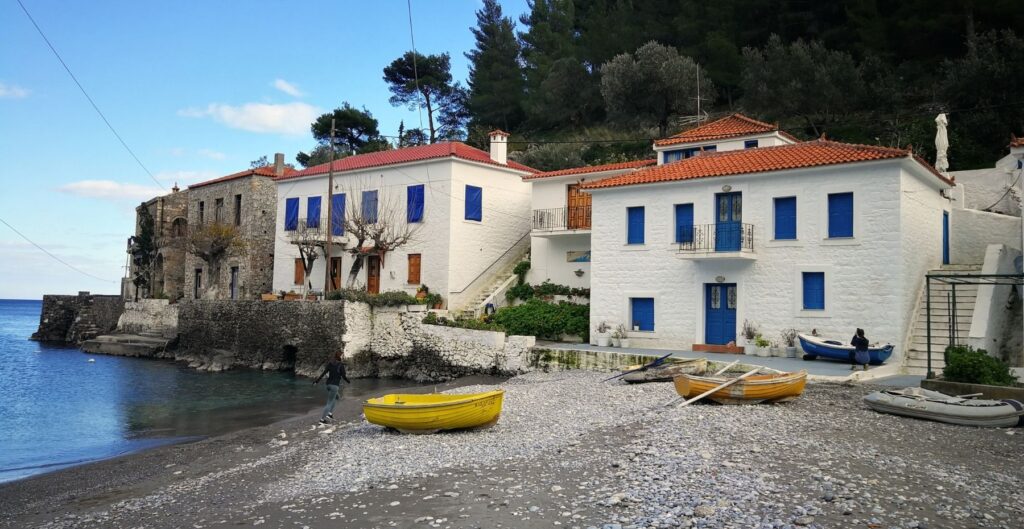
Idyllic Greek villages, Medieval castle ruins, Venetian towers, windy roads, olive groves, patches of bright green grass, emerald sea, white beaches, and smiling locals. All of these, and more, are bound to make you fall in love with the island of Evia. When you throw into the mix the tufa curtains, techy and crimpy faces, and overhanging jug fests, Manikia becomes hard to resist.
Friction? Check! Flow? Check! Uncrowded crags? Hell yeah! Striking landscapes, silence, authenticity… climbing in Manikia checks many boxes. It is a whole package deal, an immersive experience into an absolute hidden gem I hope will remain just as unspoiled as we’ve found it.
In this article
Manikia in a nutshell

Have you ever heard of the island of Evia? I hadn’t. Did hear about climbing in Manikia, though, back in 2022 when Petzl did a Roc Trip here. Since then, friends have recommended it, and it’s been on our radar for some time. Come to think of it, I don’t know why it’s taken us so long to get here. But as soon as we did, we didn’t want to leave.
Manikia is a small village on the island of Evia, also known as Euboea, about two hours north of Athens. Although it’s the second largest island in Greece, it doesn’t get as much attention as others. Green, with mountains and idyllic beaches, traditional villages, waterfalls, and springs, it is a side of Greece I hadn’t seen before.
Somewhere around the center of the island, not too far from the picturesque town of Kymi, Manikia is a small village in the upper part of a winding, steep valley sprinkled with an abundance of climbing routes, both sport and multi-pitch, short and long, steep and vertical – the shole shebang!
All in all, the climbing in Manikia is concentrated between the villages of Manikia and Vrisi.
Vrisi is the village at the lower end of the valley, bigger than Manikia. Just above Vrisi lies a secondary valley, more like an amphitheater – Mpougazi – with several climbing sectors, including the spectacular Dragonera cave with its steep, pumpy routes. From Manikia, a dirt road will take you to yet another valley, where the imposing North Face crag invites you to test your technique and stamina on aesthetic lines. From Makrichori, a small village above Manikia, another dirt road will take you to the Canyon crag, which stands opposite of North Face and offers plenty of fun for fans of the steep.
Manikia Project is behind the continuous development of this hidden Greek paradise, a non-profit association of the locals of the Manikia-Vrisi-Kymi area. This whole venture aims to promote climbing, cycling, and hiking in the area, providing info on ethical behavior, what to see and do, where to stay, where to eat, as well as to how to best preserve this slice of heaven.
Best time to climb in Manikia

If there is any downside to climbing in Manikia, it’s that most of the crags are south-facing. And here’s another catch – there is one spectacular north-facing wall, aptly named North Face, but it’s only allowed to climb there from June till December due to nesting.
So you can imagine that planning around the weather can be somewhat of a challenge, as the Greek sun is big and strong even in winter.
Besides North Face, there are only a handful of small sectors facing north, on the main valley between Vrisi and Manikia, and at Mpougazi, above Vrisi. Consequently, Manikia is mainly an autumn and winter climbing destination.
We arrived in Manikia at the beginning of November and had warm, end-of-summer-at-home-like temperatures. Then came December with a severe storm that lasted a few days. When it stopped, water was gushing out of the tufas and all the walls were dripping. The crags began to dry as soon the sun came out, but it did take about a week for the sectors to become climbable again. Even so, some tufas simply refused to dry.
We’ve learned that the weather in Manikia is quite finicky. Sometimes, the forecast is far from the truth, so it’s best to be prepared for anything. Also, this place seems to get more rain than the climbing spots in the Peloponnese.
All things considered, it’s worth knowing that Vrisi lies at 60 meters elevation, while Manikia is at 450. Obviously, there’s a difference in temps and wind exposure, so it’s certainly possible to juggle with the sectors depending on the weather.
The climbing vibes

Photo by ABC Climbing Club
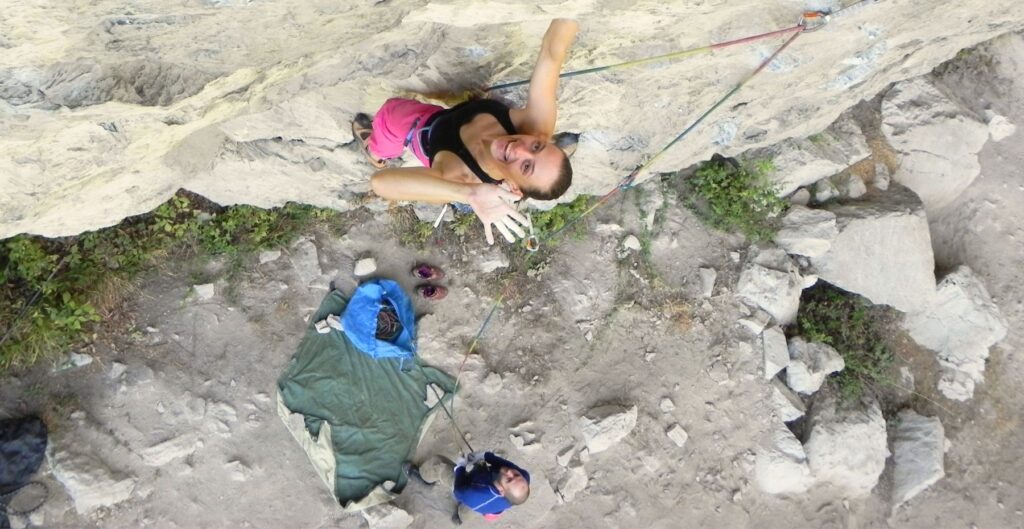
We’ve had days when it was just the two of us at the crag. When we weren’t alone (which was rare), we were mostly bumping into the same people. It was just like at our home crags in Romania. Sure, our choice of crags and the weather may have played a role in this, but it can’t have been a mere coincidence. We have had some “crowded” days at North Face when it was warm and sunny, but even then, there were no queues, and there were plenty of empty routes for the taking.
To sum it all up, there was a chill vibe all around. I loved it!
We’ve seen mainly couples and small groups of climbers, some of them determined to stay for a long time, others just passing through on their way to Leonidio. Pretty much everyone already had a climbing partner, so I don’t know how easy it’d be to hook up if you’re traveling solo. My best guess for finding a partner would be to sniff about at the campsite and at the local taverns in Vrisi and Manikia.
The guidebook

Manikia Project is also behind the guidebook for climbing in Manikia, in partnership with the local municipality. It’s a bit small in size because it lacks a description of the crags or the approaches, but it’s nevertheless valuable and I encourage buying it since all the earnings go straight into bolting and into the development of this climbing area.
You can find the Manikia climbing guidebook in the village of Manikia at the taverns, in Vrisi at Kalimera Groceries & Coffee, at the tavern in Makrichori, and the climbing shop in Konistres.
New lines are still being bolted. Currently, a few dozen new lines sprung up at Alaska Beach sector, and we’ve seen at least a couple of new small sectors that are not in the guidebook yet. You may also find new routes at some crags. And yes, there’s potential for more!
How’s the climbing in Manikia?

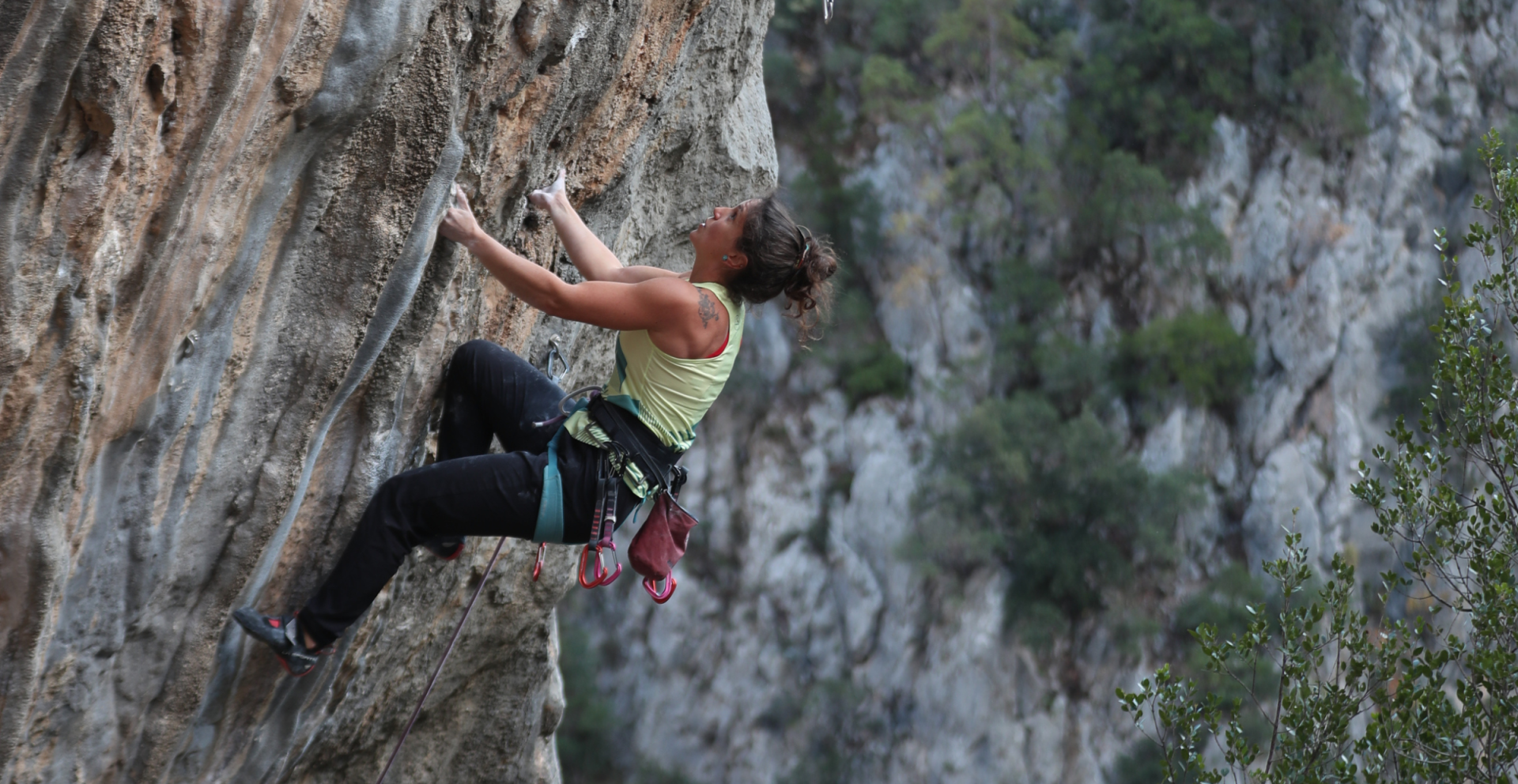
Manikia has a lot to offer for all levels and tastes. There are entire sectors with routes in the 5’s and 6’s, whole crags with routes in the 7’s, and sectors with a bit of everything. You’ll find steep, powerful overhangs as well as techy vertical climbing, tufas thin and fat, short and long, pockets, crimps, slopers, the whole shebang. Whether you want to take your kneebaring skills to the next level or are determined to not kneebar at all, you’ll find something to your liking.
The rock quality is pretty neat, with excellent friction, very little wear on the rock, almost non-existent in some places. In fact, some routes are sharp AF. At some sectors, you might tear your skin to shreads on the first days, and your climbing shoes might wear off quickly. If you ask me, I’d rather have that than polished routes. Plus, I absolutely love it when there’s not much chalk on the wall, or hardly any signs of traffic.
If I were to briefly describe climbing in Manikia, it would be pristine, aesthetic, and flowy. You can definitely find many different styles, from short and bouldery to long and pumpy, powerful moves to ballet on the rock, and pretty much everything in between.
Manikia also has a bunch of multi-pitch climbing sectors that look absolutely stunning, and they are completely separate from the sport climbing sectors. The guidebook provides info on those, too.
The main climbing sectors in Manikia

Simply put, climbing in Manikia is spread out along the steep, winding valley between the villages of Manikia (uphill) and Vrisi (downhill). There are several climbing areas, all with their own sectors.
Sure, I could go ahead and tell you which sectors I liked most, but climbing is personal, and we might have different opinions. What I will do is share some tidbits and leave you to discover the rest yourself.
Mpougazi

Just above Vrisi, the Mpougazi climbing area (pronounced “bougazi”) dominates the view. This picturesque amphitheater includes the Dragonera sector, an imposing overhanging cave with tufas, blobs, and stalactites, routes short and long, powerful and pumpy, mostly in the 7’s and 8’s. To be completely honest, I was intimidated by this cliff when I first laid my eyes on it. All it took was one climb and I immediately found myself wanting to try everything there.
Below Dragonera, you’ll find the pretty Eisodos sector, a nice crag to get into the groove at the beginning of the trip, with routes mostly vertical or slightly overhanging. At the top of the valley, there’s the impressive Rolling Stones sector, which faces east and therefore gets shade from noon onwards. Overall, Mpougazi has south-facing sectors, as well as east and north-oriented crags. Grades range from 5a to 8b, short and long, slabby, vertical, and steep, whatever your heart desires.
The main valley

On the winding valley between Vrisi and Manikia, most of the crags are on the south facing side. There are plenty of must-see sectors, some small and others big, with grades ranging from 3a to 8b. If you’re looking for tufa climbing, you’ll get your fix. If you want a break from it, you’ll find techy, crimpy, even bouldery stuff, too.
Ilona Cave is a pretty little cave above the road with an impressive variety of routes – crimpy and sharp on the left and getting steeper and steeper towards the right. Les Larmes de Sisiphe, with its tufas like melted candlewax, is absolutely stunning. To the left, you have your vertical and technical routes, while to the right get ready for a real tufa fest. Next to Sisiphe, Alaska Beach is a vertical playground, now with a bunch of new routes that seem to go all the way to the sky. Mur du 7 is a pretty compact wall that’s easy to spot above the road, with routes mostly in the 7’s. Daxi Daxi may require a longer approach, but you’ll be rewarded with routes short and long, vertical and steep, across a wide range of difficulties and styles. Le Bal Con is a small crag perched above Manikia with not that many routes yet plenty to offer, as each line is different from the next.
On the north side of the main valley, there are a few small sectors with mostly routes in the 6’s, and (so far) a handful of 7’s and 8’s.
After passing Manikia, there are two other climbing areas: Canyon (south-oriented) and North Face. They face each other.
Canyon

Canyon is a long line of yellow-orange limestone, also south-facing, where the Manikia Paralia, Musée, and Mikros Drakos sectors stand out. Manikia Paralia is a steep playground with routes from 6a+ to 8b on pockets, tufas, and crimps, short and long. Around the corner, Musée offers long, tufa-ridden journeys, while the far-right end of Canyon has slabby routes in the 5’s and 6’s. Just above the riverbed and sharing part of the approach with the one to North Face, you can find Mikros Drakos, a steep cave with aesthetic lines and some of the hardest routes in Manikia, up to 8c+. This one is in the shade almost all day during winter.
North Face

In just one word, North Face is impressive. The first time I saw, I has mixed feelings. It was the cliff at Moonikia Project that pulled me toward it. Crimpy, techy, and only slightly overhanging, I just couldn’t resist. It did not disappoint. Little by little, we moved to the other sectors. Eldorado has routes short and long, flowy and demanding, but what really catches the eye from a distance is the endless parallel tufas that beckon to be squeezed tight.
Every sector at North Face looks amazing and does not disappoint. Each line has its own unique appeal, from the massive overhang at Nagawika, with its long routes that seem to go all the way to the sky, to the imposing big cave at Coliseum, the whitish wall at Katástasi cháritos, and the steep, pocket-ridden playground Ena Thrylikó Dáchtylo.
Grades at North Face range from 5c to 9a. However, the majority are in the 7’s and 8’s, so bring your A-game!
What to bring

There are routes short and long. I’d say the sport climbing in Manikia averages around 30 meters, but there are quite a few lines 40 meters or more. So it’s best to bring a 70 or, even better, an 80-meter rope. Quickdraws? Best to have 25+.
The rock in Manikia is sharp. At many of the crags you’ll find that “nice” coral and needles that will eat away at your skin and your climbing shoes. So make sure you have spare pairs of climbing shoes, some good hand cream, and tape.
Although there aren’t as many goats, there are some and they can occasionally meddle about on the top of the cliffs, thus causing rock fall. So it’s good to wear a helmet even when just hanging around at the bottom.
Kneepads? Well, if you’re drawn to the tufas here, then bring two and get ready to pull hard.
Pack clothes for both summer and winter cause, well, you never know. The temp difference between sun and shade can be insane in winter, and don’t get me started on the difference between daytime and nighttime.
Where to stay
Camping or accommodation? There is only one campsite in the area, while accommodation options are plenty for your climbing trip to Manikia.
Camping

Dragonera Cliffs Camping in Vrisi, below the Mpougazi climbing sectors, is a family-owned, simple, clean, and quiet place. Very welcoming and kind, the owners greeted us with a welcome basket and would occasionally treat us with finger-licking homemade cakes. We stayed in a tent in November, and there were mostly vans in the campsite at the time, and not crowded at all. There are also a wooden bungalow and two caravans for rent at this campsite, which can prove a good solution for when it’s colder.
Accommodation
There are a bunch of accommodation options in Vrisi, Manikia, and Makrichori, as well in the nearby villages. These are mostly vacation homes or apartments in traditional houses.
We eventually “betrayed our cause” and ditched the tent in December. The nights were getting colder and the weather was not friendly at all, so we ended up in Makrichori in an adorable traditional Greek house, Mary’s House, that I recommend with all my heart.
Getting there

Fly to Athens, rent a car, and drive north. Or drive the whole way there. It’s a 150-kilometer drive from Athens International Airport to Manikia. The island of Evia is connected to the mainland by two bridges at Chalkida, and there are also some ferries operating.
It’s best to have a car. Or at the very least, a bike. Public transport is limited – there’s a bus that runs from Athens to Kymi, and there is sometimes a mini bus between Manikia and Konistres. That’s it. While it’s possible to walk to the sectors at Mpougazi and to sectors like Ilona Cave from Vrisi, which we often did, the other sectors do require a car to get to.
Getting around

This whole area is very quiet, very rural, very Greek, very wild, and very unspoiled.
Manikia has two taverns and a café in the village square. These also sell honey, olive oil, wine, olives, and baklava. Makrichori has one tavern, while Vrisi is the “biggest” of the bunch, with one tavern and two small shops where you can make some basic provisions.
The nearest place to make serious provisions is Konistres, 11 km from Manikia and 3 km from Vrisi.
There are three bakeries in Konistres and two butcher’s shops. There’s a larger supermarket at the entrance (Kritikos) with groceries, lots of cheese varieties, and pretty much all the basic supplies you may need.
You will find a small climbing shop in Konistres that sells homemade souvenirs, soaps, creams, and colorful handmade climbing clothes. When it comes to climbing gear, the offer is limited but it can be a real life-saver if you’re missing something. That said, we did end up buying a climbing rope from there.

There’s a farmer’s market in Konistres every Sunday morning. You’ll find stalls with fruits, veggies, honey, tea, and dairy along the main street, as well as one or two cars selling fresh fish. And yes, the main street remains open to traffic, so there are cars passing by while you pick your oranges, even the big bus to Kymi.
For a bigger supermarket (also Kritikos but with more supply), head to Chania, near Avlonari. There’s also a traditional bakery on the main street in Chania that we love, Avalona Women’s Cooperative, with both sweet and savory delicacies.
There are several supermarkets and a variety of shops in Kymi, one of the bigger towns in the area.
Aliveri is the biggest town, about 35 minutes from Vrisi, with a Lidl store and plenty of other shops for whatever necessities you may have.
There’s no gas station in Manikia or Vrisi. The nearest gas station is in Monodrio, 11 km from Manikia and 3.5 km from Vrisi. There are more towards Aliveri and Kymi.
For drinking water, there are several fresh water springs in Vrisi, Manikia, and Makrichori.
Where and what to eat
Climbing in Greece, and even more so in Manikia, is an immersive experience. The adorable villages may be small and quiet, but they do have at least one family-owned tavern that offers more than just a filling meal. The owners have a way of making you feel welcomed, while their dishes always have that home-cooked fragrance.
In Manikia, Kafé-Oinopantopoleío “I Agapi” means “The Love” and it has a very fitting name. Right in the square, it’s the place to go for Greek coffee and delicious, homemade baklava. Family- owned, with a very authentic Greek vibe, this is a café where you can grab some meze (appetizers), have a beer in the evening, and maybe even meet some local climbers. You can also buy local honey and olives from here.
Also in the square in Manikia, Kafé-oinopantopoleío “I Plateia” (“The Square”) serves traditional Greek dishes, as well as meze and coffee. They also sell olive oil and local wine.
Next to the square in Manikia, To koutoúki tou Vláchou (“The Vlach’s little corner”) is a barbecue restaurant that serves traditional homemade dishes with fresh, local ingredients.
Patrídos Géfseis (“Homeland Flavors”) is a traditional Greek tavern in Makrichori with yet another fitting name, as it serves traditional Evian dishes. The owners, husband and wife, are incredibly welcoming and eager to help, and their desserts are to die for.
In Vrisi, Taverna To Lampageío is perhaps the “busiest” tavern of the bunch during the off-season (aka climbing season). Family-owned, obviously, it serves authentic Greek dishes and fish. At certain times, there might even be live music and there’s a good chance you’ll get a sweet treat on the house at the end of the meal.

I soon became a regular customer of Septem Microbrewery. On the way to Chania, this microbrewery is where I’d stock up on craft beer. Pick your favorite beers from the menu and take a peek inside the factory while you wait for your “order.” They have a different beer for each day of the week, plus a few other varieties, as well as barley wine.
There’s a car with fresh fish driving around Konistres and the neighboring villages on most days; they usually have different types of fish each day. There’s also a car driving around selling meat, and another one that’s a mobile bakery.
In addition to all of the above, I’ll blurt out some more ideas for a complete, delish gastronomic experience: Kymi-style dried figs (split and opened before dried in the sun), sausages with orange peel, mountain tea, feta cheese from the shepherds, dried olives, smoked olives, homemade wine, olive oil, fig jam, spanakopita (pastry with spinach and feta), baklava, melomakarona (Christmas honey cookies), portokalopita (sponge cake with orange syrup), tsipouro (grape spirit), and, of course, the thick and fragrant local honey.
Useful phrases in Greek
In Manikia and the neighboring villages, not many people speak English, and it can sometimes be difficult to communicate. That said, the locals are super friendly and eager to help, resorting to signs, drawings even. So here are a few words and phrases you can use in your interactions. They may not necessarily save the conversation, but they’ll surely get some smiles from the locals.
- Yia sas – Hello/Goodbye
- Kaliméra – Good morning (till noon)
- Kalispéra – Good afternoon/Good evening
- Kaliníhta – Goodnight
- Ne – Yes
- Ohi – No
- Efharistó – Thank you (and efharistó polí for “Thank you very much”)
- Parakaló – Please/you’re welcome
- Kalá – Good
- Ti kánis? – How are you?
- Íme kalá – I am good
- Endaxi – Okay, alright, fine
- Aftó– This
- Ela – Come
- Mia bíra, parakaló – A beer, please
- Yia mas! – Cheers!
- Posó kánei? – How much is it?
- Ómorfo/ómorfi – Beautiful
Rest days in Manikia

It’s not difficult at all to keep yourself entertained during rest days in Manikia. That is, if you still have any energy left.
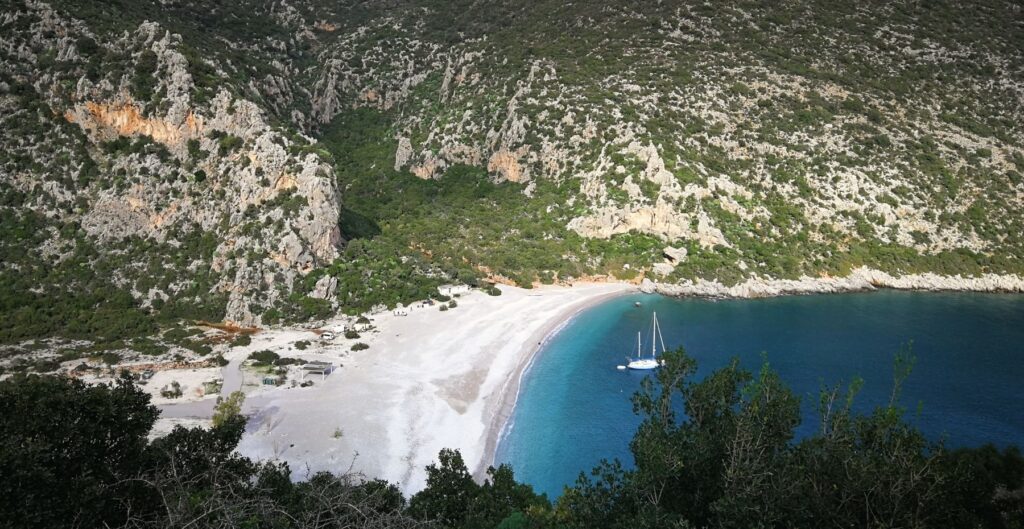
For example, you could head to the beach. The nearest beach is Stomio Beach, some 18 km from Manikia. From there you can continue driving along the sea toward Kymi. For a truly spectacular beach, check out Kalamos Beach, a white-sand beach in a sheltered cove where there are in fact four beaches, two of them hidden. There are many others to explore, like Mourteri Beach, Korasida Beach, the beaches near Kymi, and the stunning beaches on the north coast that are a bit more difficult to reach, like Thapsa Beach.
Kolethra Spring is a nice walk from Vrisi past olive groves and the old Vrisi stone bridge. This rather unusual spring has a mesmerizing turquoise color and is in fact a very deep pit. Manikiatis Waterfall, below the village of Manikia, is a must-see and the locals are particularly proud of his hidden natural sight.

If you’ve itchy feet, go for a walk to Couppa Castle (also known as Dragonera Castle) and the church of Panagia Dragonera above Vrisi. There’s a path leading to the church, an ancient road actually, since this whole ridge is an archeological site. It was an ancient settlement and then a medieval fortress, and you can still see remnants of walls and gates, a holy fountain in a cave, as well as two towers at the western end where the fortification is in better shape.
What else? Visit Kymi, one of the larger towns in the area, perched under a pointy hill. Take a walk on the narrow, windy, and steep streets of Avlonari to get to the top where a medieval Venetian tower stands guard. Look on the map and drive somewhere. Anywhere. You won’t be disappointed.
Then, of course, you don’t need to do something on rest days. You can just rest on a rest day. How’s that for an idea? Take it easy, hit the local tavern, lie down under an olive tree, get a nice tan, and mingle with the merry locals. Get into the mellow Greek rhythm, but be warned – it’s contagious.